


Luxury Jewellery Becomes Collectible Art
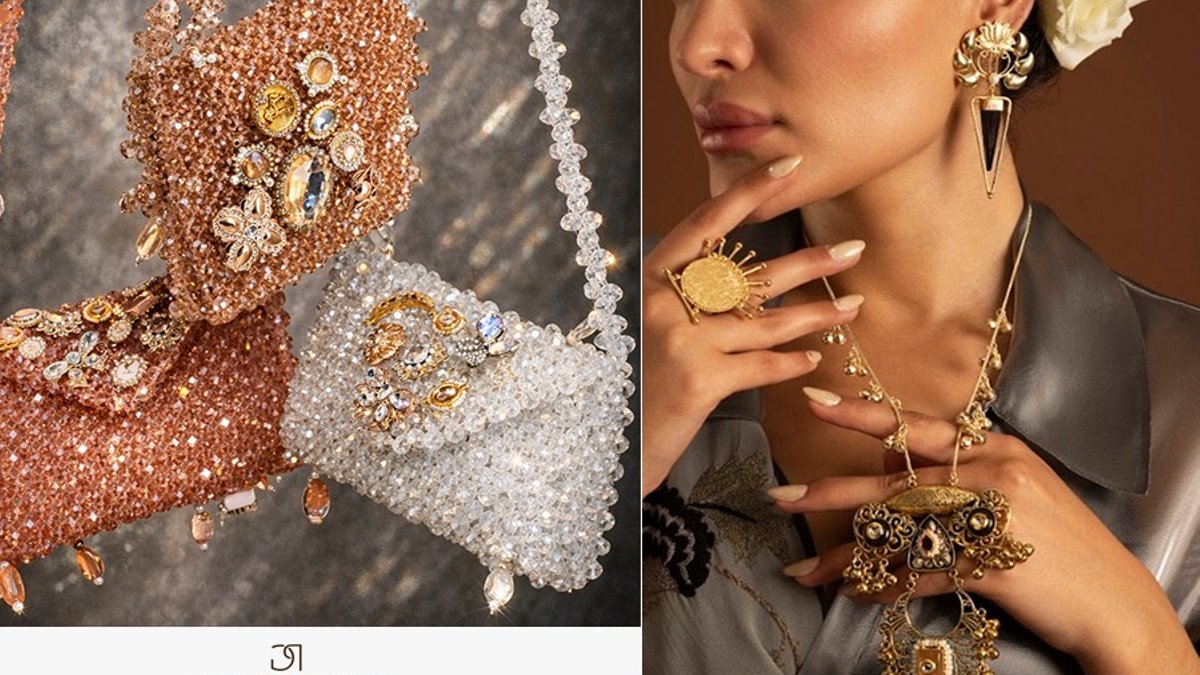
Luxury is moving beyond the idea of an accessory being simply beautiful, precious or recognisable. We are increasingly entering a space where jewellery and accessories are being viewed as art objects in their own right—pieces that have a strong point of view, a sense of craftsmanship and, most importantly, a story to tell.
At Puneet Gupta Crafted Fine Goods, this is a space that interests Puneet Gupta deeply. With their demi-fine jewellery, they approach a ring, cuff, pendant or pair of earrings almost as a miniature sculpture.
The intention is not merely to adorn the wearer, but to create an object with enough character to become part of their personal collection. Puneet Gupta says, “The intention is not merely to adorn the wearer, but to create an object with enough character to become part of their personal collection.”
Their fascination with archaeology, natural forms, Indian craft traditions and aged textures allows them to create pieces that feel as though they have been discovered rather than simply manufactured. This approach is particularly relevant to the new generation of luxury consumers.
Luxury Consumers’ Changing Preferences
They are becoming less interested in buying something simply because it is expensive and more interested in why it exists—what inspired it, who made it, what material it uses and what makes it different. There is a growing appetite for pieces with individuality rather than obvious uniformity.
This movement extends beautifully into accessories beyond conventional jewellery. Sculptural metal bags, statement brooches and embellished wearable objects are increasingly occupying the space between fashion and art. A metal bag, for instance, can function as an accessory but also as a small piece of industrial sculpture.
Related: Jewellery stocks slip on gold buying concerns
Indian Craftsmanship’s Role in Luxury
Indian craftsmanship has an important role to play in this evolution. Puneet Gupta‘s artisans possess centuries of knowledge around metalwork, embroidery, carving, surface treatment and ornamentation. The opportunity today is not to reproduce traditional objects, but to take that knowledge and reinterpret it through a contemporary design language.
Puneet Gupta notes, “The opportunity today is not to reproduce traditional objects, but to take that knowledge and reinterpret it through a contemporary design language.” Perhaps the most interesting shift is that value is becoming more emotional and intellectual.
A piece does not have to be made entirely of precious materials to feel luxurious. It can derive its value from the originality of its design, the hand that made it, the story behind it and the fact that it feels unlike anything else. The future of luxury, therefore, may belong to the conscious collector, someone who buys fewer accessories but chooses pieces that have a life beyond a single season.
The Emerging Luxury Collector
Jewellery, bags and brooches become more than things we wear. They become objects we discover, live with and eventually leave behind. The next chapter of luxury may not be about owning more, it may be about owning pieces that mean more.
As consumers seek authenticity, craftsmanship and individuality, the line between jewellery, fashion and art is becoming increasingly fluid. The emerging luxury collector is not simply buying an accessory; they are acquiring an object with a story, a point of view and the potential to outlive a trend. In this context, the value of a piece is no longer solely determined by its material worth, but by its ability to evoke emotion and tell a story.

