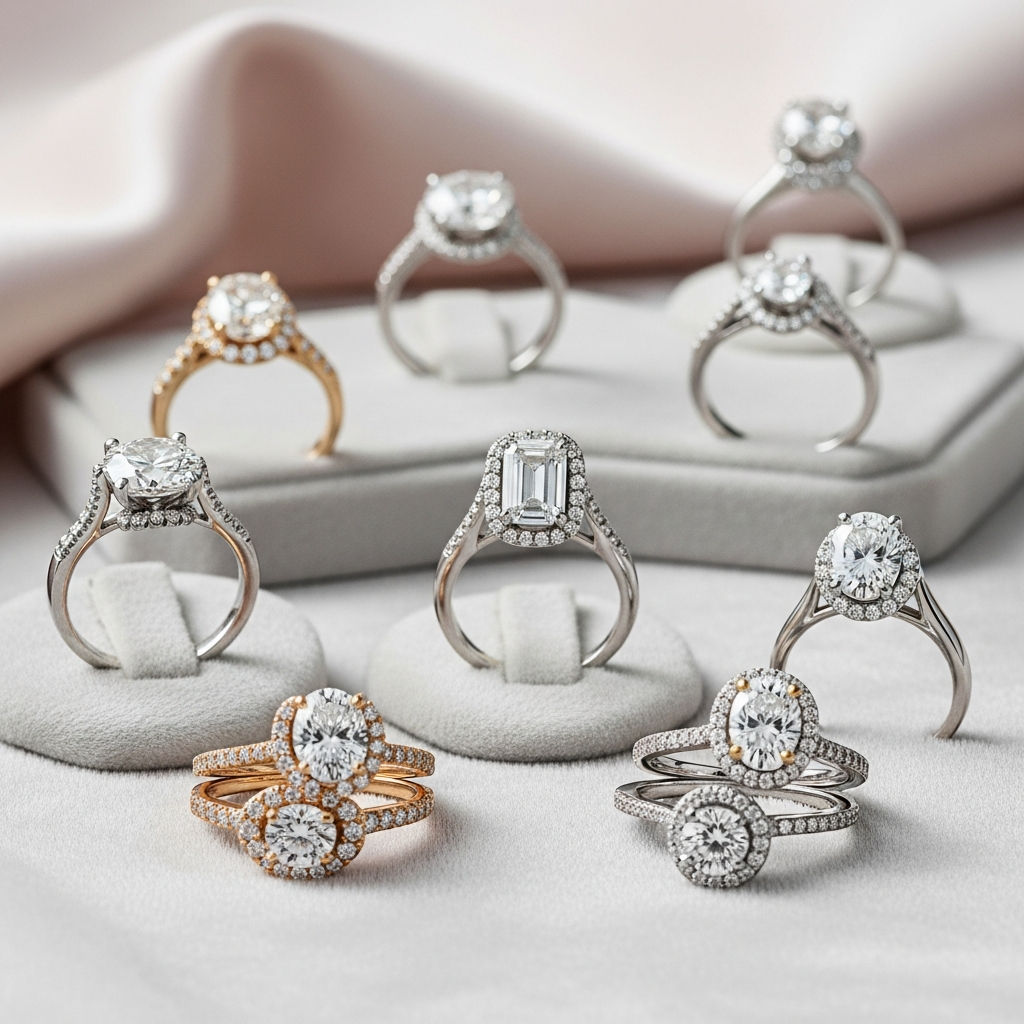
The Ultimate Guide to Engagement Rings: Choosing the Symbol of Your Forever
Choosing an engagement ring is one of the most significant and emotional purchases a person will ever make. It is more than just a piece of fine jewelry; it is a profound symbol of love, commitment, and the promise of a shared future. However, stepping into the world of diamonds, gemstones, and precious metals can feel overwhelming for the uninitiated.
Whether you are planning a surprise proposal or shopping together as a couple, understanding the nuances of engagement rings ensures you select a piece that reflects your partner’s style and stands the test of time. In this comprehensive guide, we will explore everything from the legendary 4Cs to modern trends and sustainable alternatives.
Understanding the 4Cs: The Foundation of Diamond Quality
If you are looking for a traditional diamond engagement ring, the “4Cs” are the universal standard for judging diamond quality. Established by the Gemological Institute of America (GIA), these four factors determine a diamond’s value and brilliance.
1. Cut
Often considered the most important of the 4Cs, the cut refers to how well a diamond’s facets interact with light. A well-cut diamond will reflect light internally and back out through the top, creating that signature sparkle. Cuts range from “Excellent” to “Poor.” Even a diamond with perfect color and clarity can look dull if the cut is too shallow or too deep.
2. Color
White diamonds are graded on a scale from D (colorless) to Z (light yellow or brown). Truly colorless diamonds are the rarest and most expensive. However, most consumers find the “near-colorless” range (G-J) offers the best value, as any slight tint is usually invisible to the naked eye once set in a ring.
3. Clarity
Clarity measures the presence of internal “inclusions” or surface “blemishes.” The scale ranges from Flawless (FL) to Included (I). Most diamonds have tiny imperfections that are only visible under 10x magnification. “Eye-clean” diamonds—those where imperfections cannot be seen by the naked eye—are highly sought after for their balance of beauty and price.
4. Carat Weight
Carat refers to the diamond’s weight, not necessarily its physical size. While larger carats are often more expensive, a diamond’s “spread” (how it is cut) can make a smaller carat weight look larger. It is often wise to buy just below whole-number carats (e.g., 0.90ct instead of 1.0ct) to save money without a visible difference in size.
Popular Engagement Ring Settings and Styles
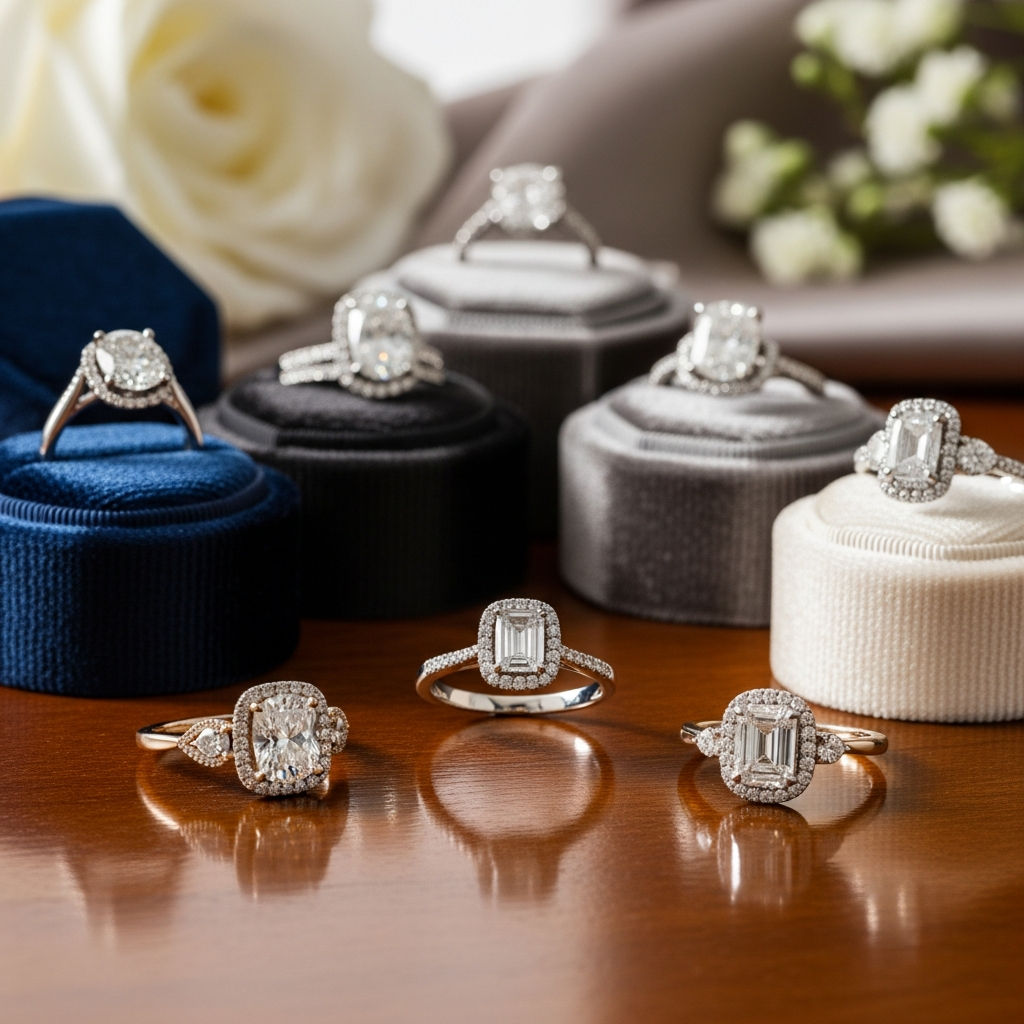
The setting is what defines the personality of the ring. It holds the center stone in place and dictates the overall aesthetic, from vintage-inspired to ultra-modern.
- Solitaire: The most classic choice. It features a single diamond held by prongs, allowing the stone to take center stage.
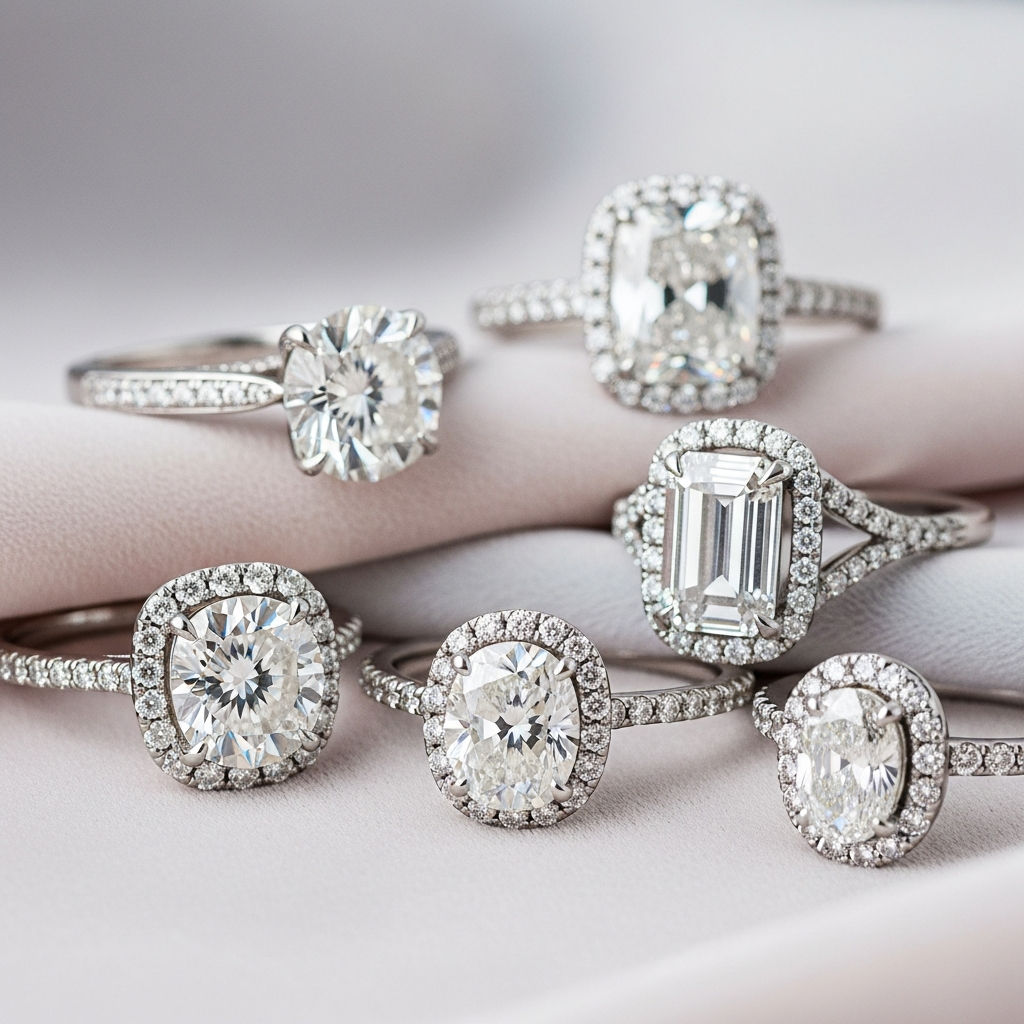
- Halo: A ring of smaller diamonds surrounds the center stone. This not only adds extra sparkle but can also make the center diamond appear much larger.
- Three-Stone (Trilogy): Representing the past, present, and future of a relationship, this style features a center stone flanked by two side stones.
- Pavé: The band is “paved” with tiny diamonds, creating a continuous line of shimmer along the finger.
- Bezel Setting: The metal wraps around the edge of the diamond. This is a secure, modern look that is perfect for those with active lifestyles as it prevents snagging.
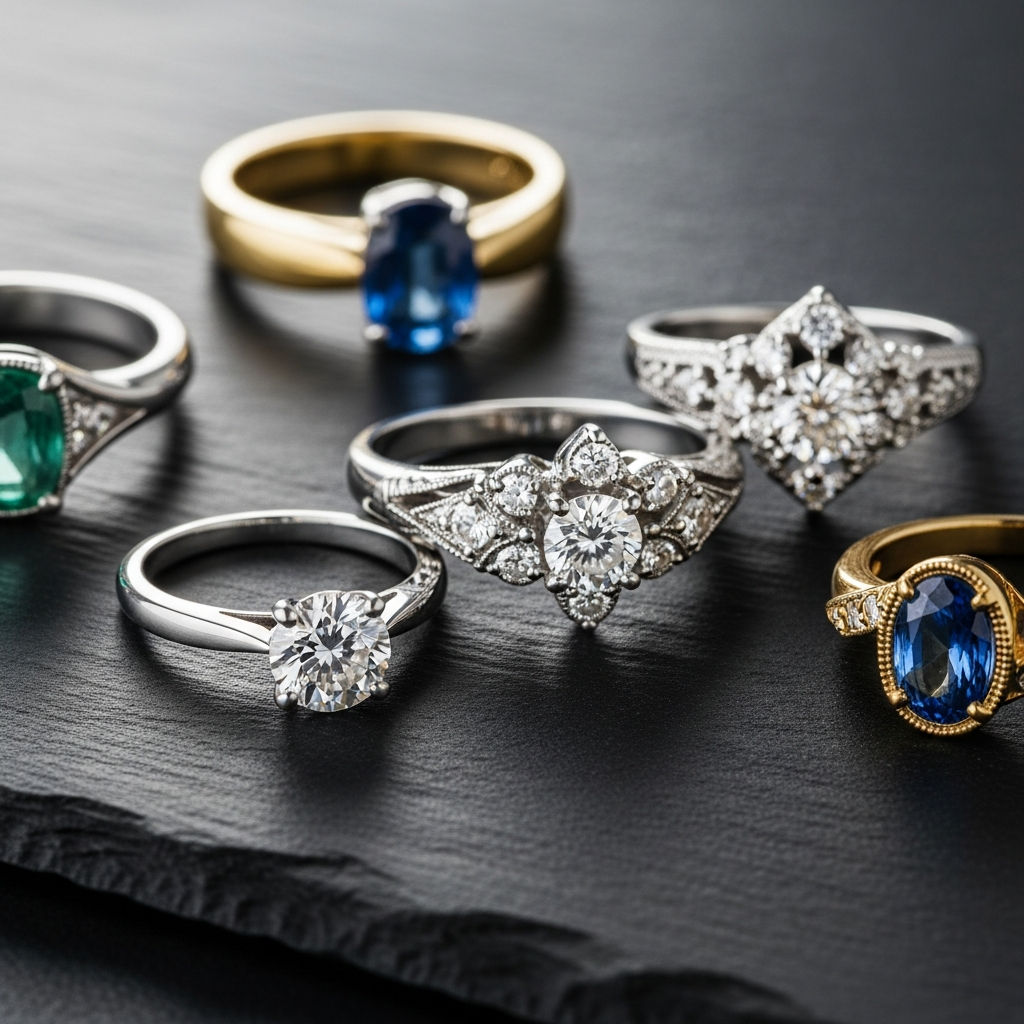
- Vintage/Antique: These rings often feature intricate metalwork like milgrain (tiny beads) and filigree (delicate wire patterns), echoing styles from the Art Deco or Victorian eras.
Choosing the Right Metal
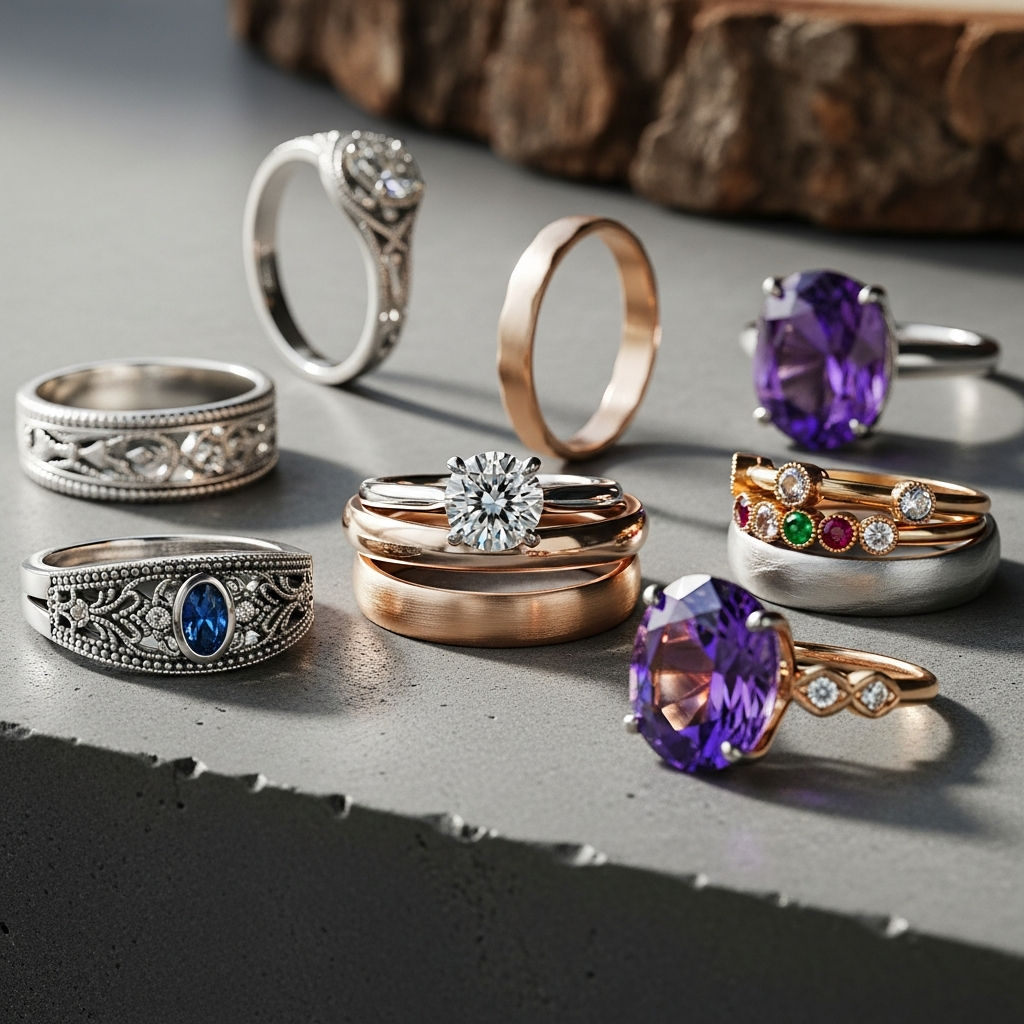
The metal you choose for the band affects both the ring’s durability and how the gemstone appears. Here are the most common options for engagement rings:
Platinum
Platinum is the most durable and rarest of the precious metals. It is naturally white, meaning it won’t fade or change color over time. It is also hypoallergenic, making it ideal for those with sensitive skin. However, it is more expensive than gold due to its density and purity.
White Gold
White gold offers a similar look to platinum but at a lower price point. It is an alloy of gold and white metals (like palladium or silver) and is typically plated with rhodium to give it a bright white finish. Over time, this plating may wear off, requiring a simple re-plating every few years.
Yellow Gold
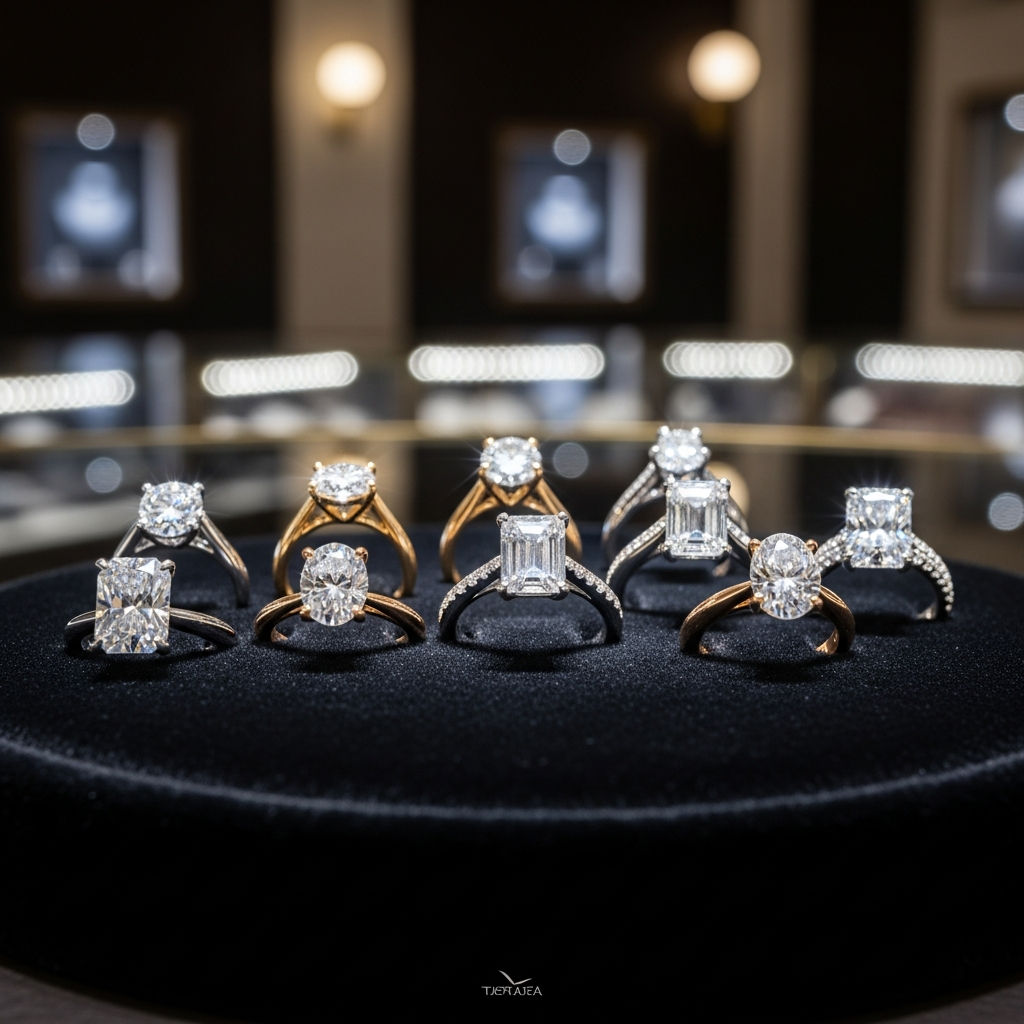
Yellow gold is making a massive comeback in modern engagement ring trends. It provides a warm, classic glow and is particularly flattering on warm skin tones. 14k or 18k gold is preferred for engagement rings to balance purity with durability.
Rose Gold
Created by mixing gold with copper, rose gold offers a romantic, pinkish hue. It is highly durable and complements almost all skin tones, making it a popular choice for unique, feminine designs.
The Rise of Lab-Grown Diamonds and Gemstone Alternatives
In recent years, the market for engagement rings has shifted toward more diverse options. Many couples are now looking beyond traditional natural diamonds for ethical or aesthetic reasons.
Lab-Grown Diamonds
Lab-grown diamonds are chemically, physically, and optically identical to mined diamonds. The only difference is their origin. Because they are grown in controlled laboratory environments, they are typically 30% to 50% less expensive than mined diamonds and carry fewer environmental and ethical concerns.
Moissanite
Moissanite is a gemstone that was originally discovered in a meteor crater. Today, it is lab-created and has more “fire” (rainbow light flashes) than a diamond. It is nearly as hard as a diamond, making it an excellent budget-friendly alternative for daily wear.
Colored Gemstones
Sapphires, emeralds, and rubies are becoming increasingly popular as center stones. Sapphires, in particular, are a great choice because they are very hard (9 on the Mohs scale) and come in every color of the rainbow, including the famous royal blue seen on the Duchess of Cambridge’s ring.
How to Choose the Perfect Engagement Ring: 3 Practical Tips
Once you understand the technicalities, you still need to find “the one.” Here are three tips to ensure a successful purchase:
1. Consider Her Lifestyle
Does your partner work with their hands? If so, a low-profile setting (like a bezel or a low-set solitaire) is better than a high-profile setting that might get caught on clothing or equipment. Durability is key for a piece of jewelry meant to be worn every day for decades.
2. Determine Your Budget Early
Ignore the outdated “three months’ salary” rule. The right budget is what you are comfortable spending. By setting a budget early, you can prioritize which of the 4Cs is most important to you—whether that is a larger stone or a higher quality cut.
3. Don’t Forget the Wedding Band
Some engagement rings are “flush-fit,” meaning a straight wedding band will sit right against them. Others have unique shapes that require a curved or contoured wedding band. Consider how the two rings will look as a set early in the process.
Final Thoughts
At its heart, an engagement ring is a physical manifestation of a promise. While the technical aspects of diamonds and metals are important, the most crucial factor is the meaning behind the ring. Whether it is a two-carat diamond solitaire or a unique vintage sapphire, the best engagement ring is the one that reflects your partner’s unique personality and the love you share.
Take your time, do your research, and choose a reputable jeweler who provides certification (like GIA or IGI). With the right knowledge, you can move forward with confidence, knowing you’ve chosen a symbol of love that will be cherished for a lifetime.