“`html
The Eternal Brilliance: An In-Depth Guide to Diamonds
Diamonds have long been celebrated as the “king of gemstones.” Known for their unmatched brilliance, incredible hardness, and symbolic association with eternal love, diamonds are more than just pieces of jewelry; they are geological wonders. Whether you are looking to purchase an engagement ring, invest in loose stones, or simply understand the science behind these carbon structures, this guide covers everything you need to know about diamonds.
How Diamonds are Formed: A Journey from the Earth’s Core
The story of a diamond begins billions of years ago, deep within the Earth’s mantle. Unlike other gemstones that form in the Earth’s crust, diamonds require extreme conditions to manifest. They are composed of a single element: carbon. Under intense pressure (about 725,000 pounds per square inch) and scorching temperatures (between 2,000 and 2,200 degrees Fahrenheit), carbon atoms bond together in a unique crystal structure.
These stones are eventually brought closer to the surface through deep-seated volcanic eruptions. The medium for this transport is a specific type of rock known as Kimberlite. When these “Kimberlite pipes” cool, they trap the diamonds within them, waiting to be discovered by miners. This rare process is why natural diamonds are considered finite and precious resources.
The 4Cs of Diamond Quality: How to Evaluate a Stone
When purchasing or grading a diamond, the industry uses a standardized system known as the 4Cs. Established by the Gemological Institute of America (GIA), these four factors determine the rarity and price of a diamond.
1. Cut
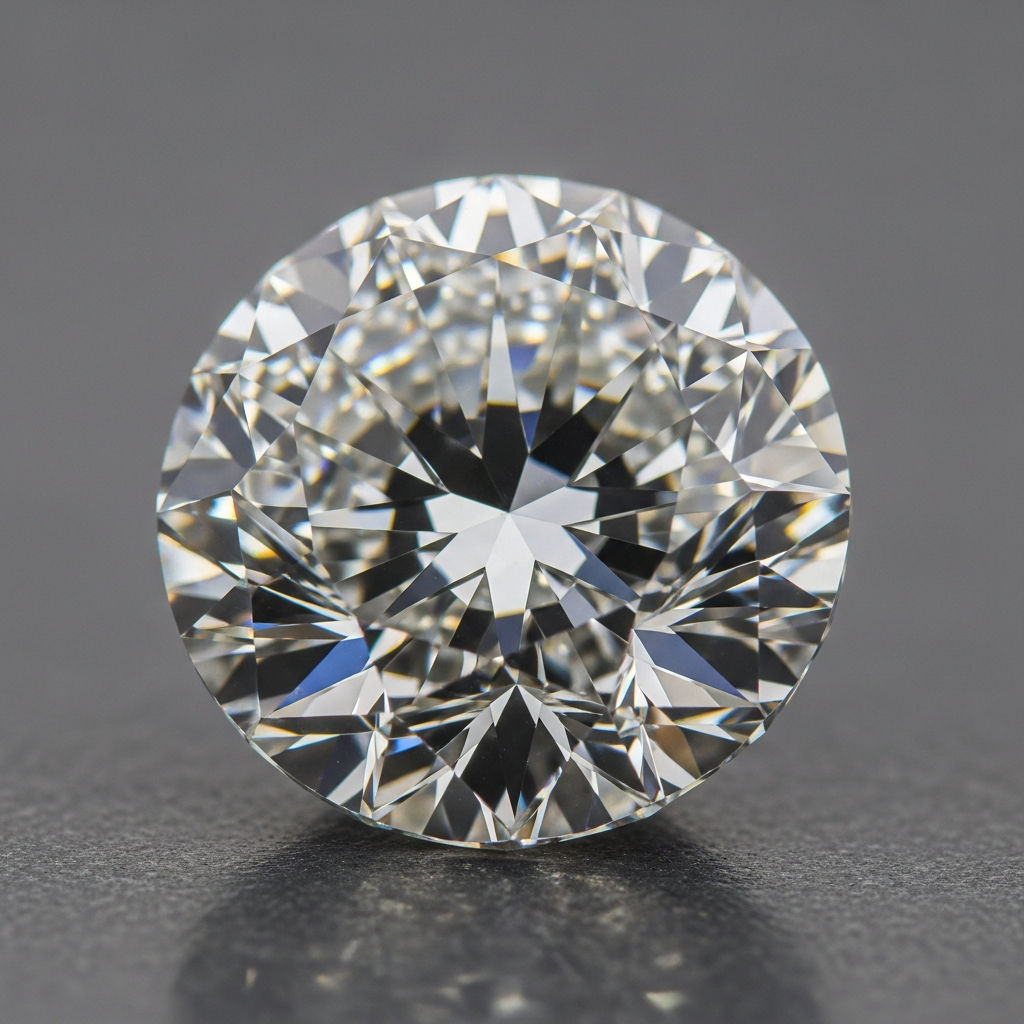
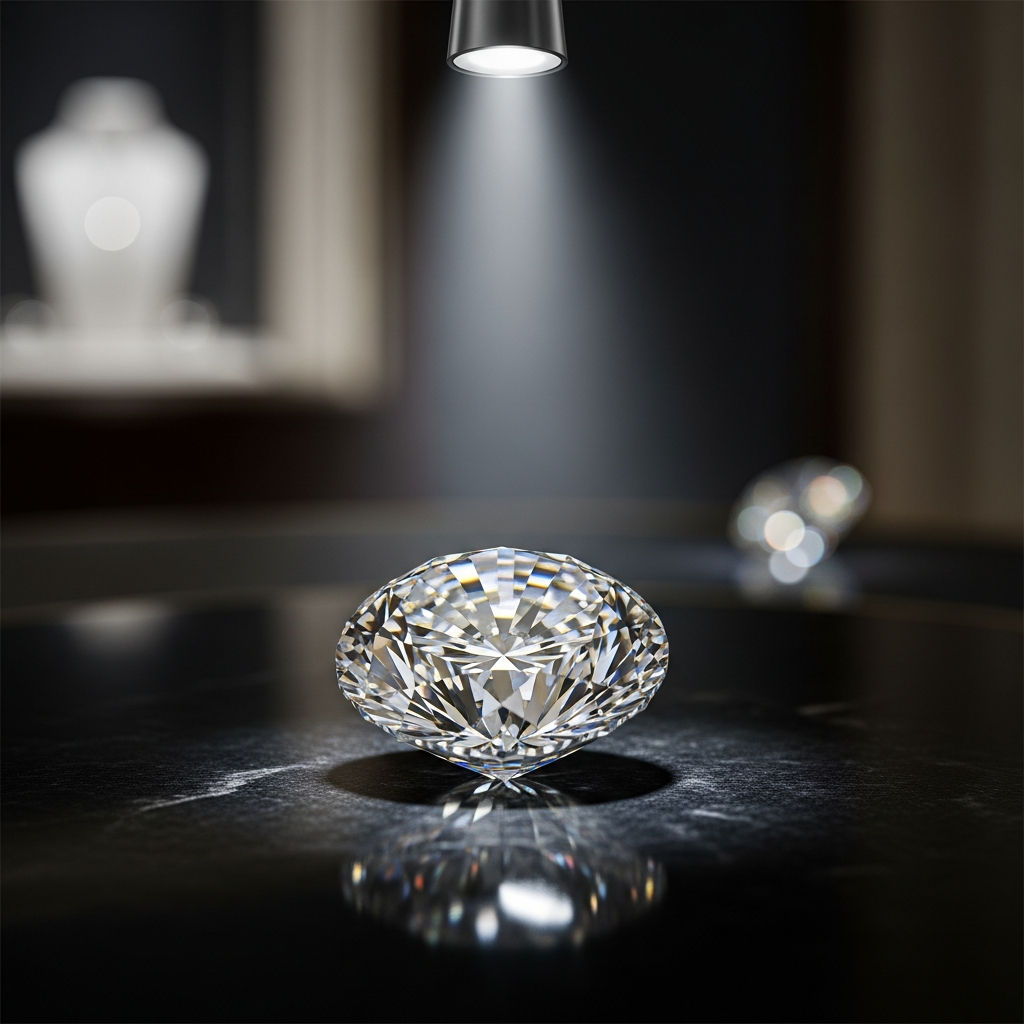
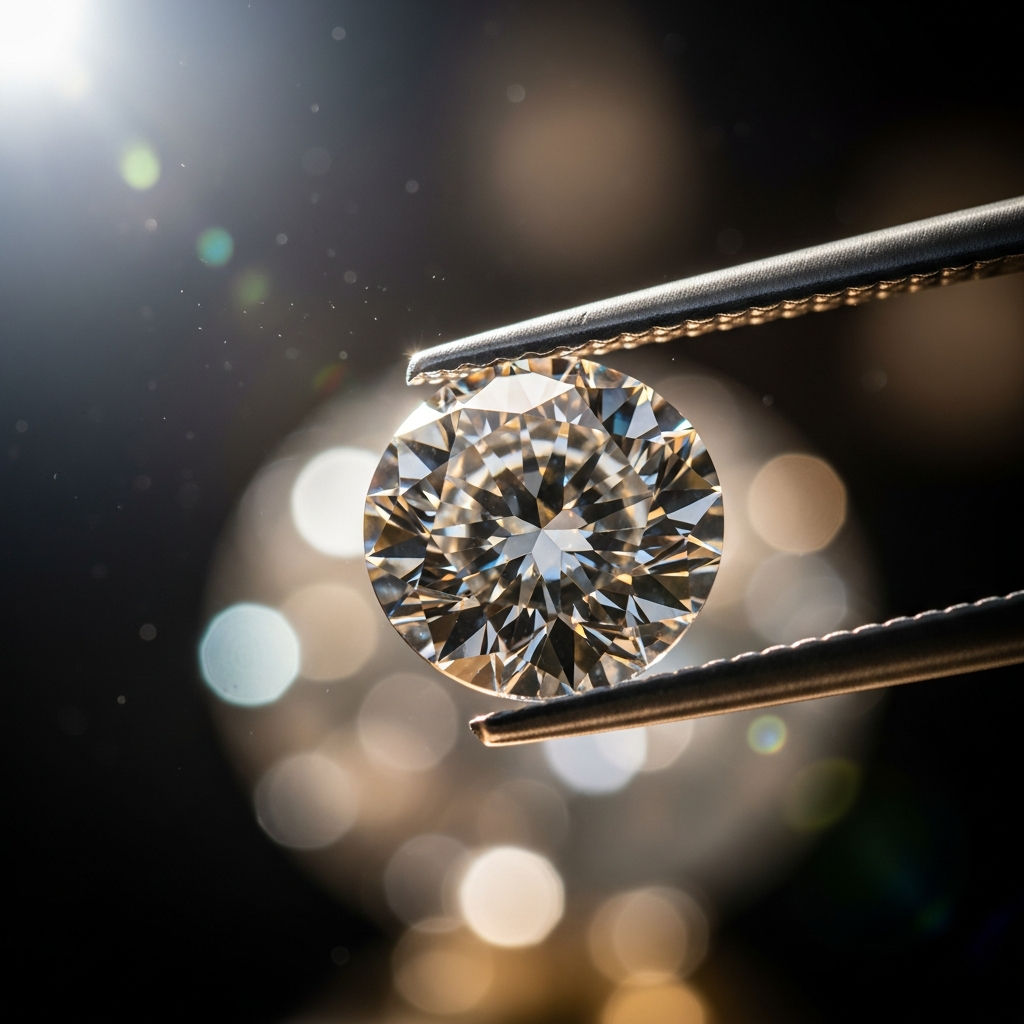
The cut is perhaps the most important of the 4Cs. While many people mistake “cut” for the shape of the diamond (such as round, pear, or oval), it actually refers to how well a diamond’s facets interact with light. A well-cut diamond reflects light internally from one facet to another and disperses it through the top, creating that signature sparkle.
- Excellent: Maximum fire and brilliance.
- Good/Very Good: Reflects most light, offering a high-quality look for a lower price.
- Fair/Poor: Light escapes from the sides or bottom, making the diamond appear dull.
2. Color
In white diamonds, the “color” grade actually refers to the absence of color. The GIA scale ranges from D (completely colorless) to Z (light yellow or brown).
- D-F: Colorless (rarest and most expensive).
- G-J: Near colorless (excellent value, appears white to the naked eye).
- K-M: Faint tint.
3. Clarity
Diamonds are formed under immense pressure, which often results in internal “inclusions” or surface “blemishes.” Clarity measures the presence or absence of these flaws.
- FL/IF: Flawless or Internally Flawless.
- VVS1/VVS2: Very, Very Slightly Included (flaws invisible under 10x magnification).
- VS1/VS2: Very Slightly Included (flaws difficult to see with 10x magnification).
- SI1/SI2: Slightly Included (flaws may be visible to the naked eye).
4. Carat Weight
Carat refers to the diamond’s weight, not necessarily its physical size. One carat is equal to 200 milligrams. While a higher carat weight usually means a higher price, two diamonds of the same weight can have vastly different values depending on their Cut, Color, and Clarity.
Natural vs. Lab-Grown Diamonds: What’s the Difference?
In recent years, lab-grown diamonds have surged in popularity. It is a common misconception that lab diamonds are “fake.” In reality, they are chemically, physically, and optically identical to natural diamonds. The only difference is their origin.
- Natural Diamonds: Created by nature over billions of years. They hold higher resale value due to their scarcity.
- Lab-Grown Diamonds: Created in a laboratory using High Pressure High Temperature (HPHT) or Chemical Vapor Deposition (CVD) methods. They are typically 30% to 70% less expensive than natural diamonds.
- Sustainability: Many consumers choose lab-grown diamonds for ethical and environmental reasons, as they require no mining.
Fancy Colored Diamonds: Beyond the White Sparkle
While most consumers look for colorless diamonds, there is a whole world of “fancy” colored diamonds. These occur when trace elements interact with the carbon during formation. For example, nitrogen creates yellow diamonds, while boron creates blue diamonds. Pink and red diamonds are the rarest of all, often fetching millions of dollars at auctions. Unlike white diamonds, colored diamonds are graded on the intensity of their hue rather than their lack of color.
Industrial Applications: Hardness at Work
Diamonds are famous for being the hardest natural substance on Earth, scoring a perfect 10 on the Mohs scale of mineral hardness. This makes them indispensable in various industries. Roughly 80% of mined diamonds are not suitable for jewelry and are instead used for industrial purposes, including:
- Cutting and Drilling: Diamond-tipped drill bits and saws are used to cut through stone, concrete, and metal.
- Abrasives: Diamond dust is used for polishing and grinding other gemstones and industrial tools.
- Electronics: Due to their high thermal conductivity, diamonds are used in high-performance semiconductors and heat sinks for computers.
- Medicine: Diamond scalpels are used in delicate surgeries, such as eye surgery, where precision is vital.
The Ethics of Diamond Sourcing
In the past, the diamond industry faced criticism regarding “conflict diamonds” or “blood diamonds”—stones sold to fund insurgencies and war. However, the industry has undergone significant transformation. The **Kimberley Process Certification Scheme (KPCS)** was established in 2003 to prevent conflict diamonds from entering the mainstream market. Today, over 99% of diamonds are sourced from conflict-free regions. Responsible consumers now often look for diamonds with “provenance” reports that track the stone from the mine to the finger.
How to Care for Your Diamond
While diamonds are incredibly durable, they are not indestructible. They can chip if hit at the right angle, and they easily attract grease and skin oils, which dull their sparkle. To keep your diamond looking its best:
- Clean it regularly using warm water, mild dish soap, and a soft-bristled toothbrush.
- Avoid wearing diamond jewelry while doing heavy manual labor or using harsh chemicals.
- Store diamond pieces separately in fabric-lined pouches to prevent them from scratching other jewelry.
- Have your settings checked by a professional jeweler once a year to ensure the stones are secure.
Conclusion: Is a Diamond Right for You?
Diamonds remain the gold standard for luxury and durability. Whether you value the ancient history and rarity of a natural diamond or the affordability and innovation of a lab-grown stone, understanding the 4Cs and the sourcing process is essential. A diamond is more than a purchase; it is a lasting legacy that can be passed down through generations, retaining its beauty and brilliance for centuries to come.
“`