The Ultimate Guide to Diamonds: Nature’s Most Brilliant Masterpiece
For centuries, the diamond has held a position of unmatched prestige in the human imagination. Renowned as the hardest natural substance on Earth and celebrated for its unparalleled brilliance, the diamond is more than just a gemstone—it is a symbol of endurance, love, and luxury. Whether you are looking to purchase an engagement ring, curious about the geological origins of these stones, or interested in their industrial applications, understanding the diamond is a journey through science, history, and art.
In this comprehensive guide, we will explore everything you need to know about diamonds, from their formation deep within the Earth’s mantle to the modern innovations of lab-grown stones and the intricate “4Cs” used to determine their value.
The Science of Brilliance: What is a Diamond?
At its most basic level, a diamond is a solid form of the element carbon. What sets it apart from graphite (the lead in your pencil, which is also made of carbon) is its molecular structure. In a diamond, the carbon atoms are arranged in a highly symmetrical, three-dimensional cubic crystal lattice. This unique arrangement is what gives the diamond its legendary hardness.
On the Mohs Scale of Mineral Hardness, the diamond sits at a perfect 10. This means it is significantly harder than the next hardest mineral, corundum (rubies and sapphires). Because of this durability, a diamond can only be scratched by another diamond, making it an ideal choice for daily wear in jewelry.
From Fire and Pressure: How Diamonds Are Formed
The journey of a natural diamond begins roughly 100 miles below the Earth’s surface. The conditions required to create these stones are extreme: temperatures reaching 2,000 degrees Fahrenheit and pressures exceeding 725,000 pounds per square inch. Under these conditions, carbon crystallizes over millions—and sometimes billions—of years.
Diamonds are brought to the surface through rare volcanic eruptions known as kimberlite or lamproite events. These eruptions create “pipes” or vertical conduits through which magma carries the diamonds upward. Most of the natural diamonds we mine today were formed between 1 billion and 3.5 billion years ago, making them some of the oldest objects you can ever hope to touch.
Evaluating Quality: The 4Cs of Diamonds
When purchasing a diamond, it is essential to understand the universal grading system established by the Gemological Institute of America (GIA). Known as the 4Cs, these criteria determine the quality and price of a stone.
1. Cut
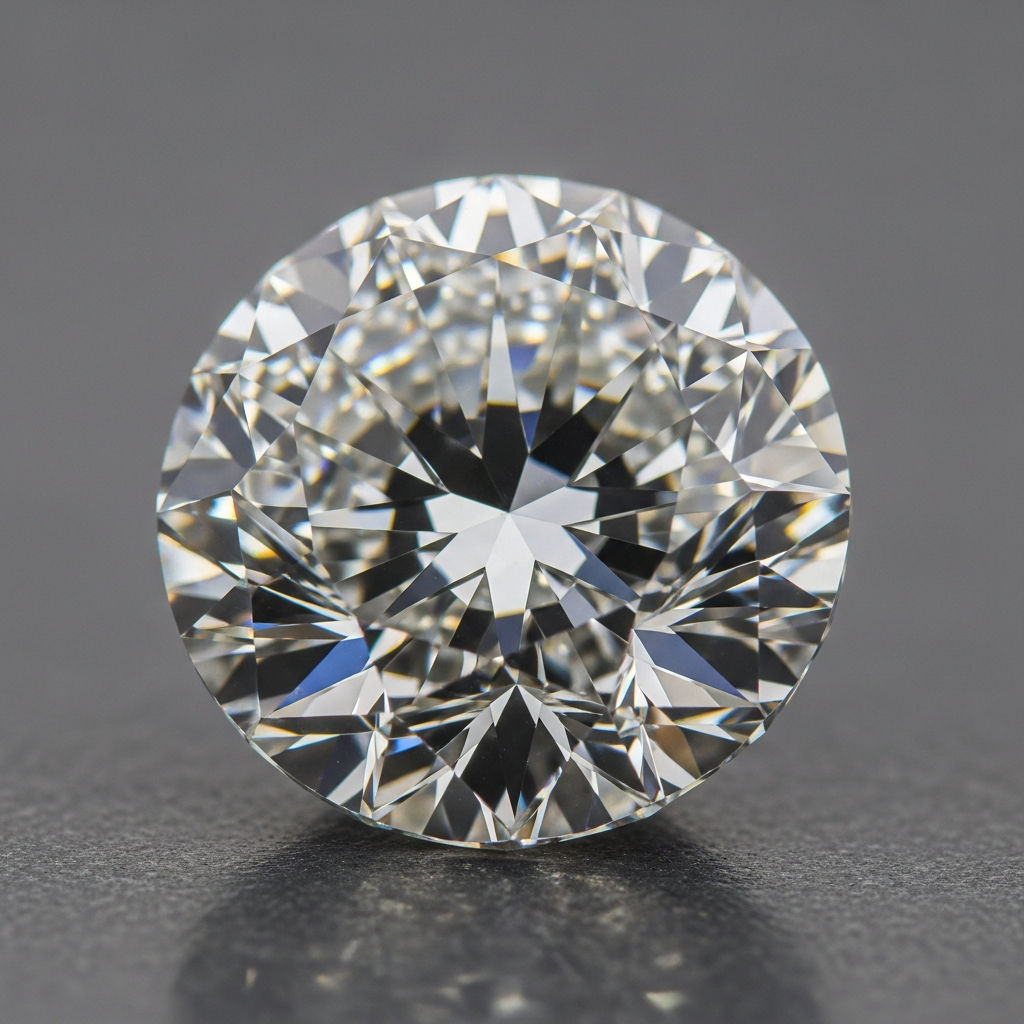
The cut is arguably the most important of the 4Cs. It does not refer to the shape of the stone (like oval or pear) but rather how well the facets interact with light. A well-cut diamond reflects light internally from one facet to another and disperses it through the top, creating that signature “sparkle.” Cuts are graded from Excellent to Poor.
2. Color
The color of a diamond is graded on a scale from D (colorless) to Z (light yellow or brown). The most valuable diamonds are those that are chemically pure and structurally perfect, appearing completely colorless. However, “fancy” colored diamonds—such as blue, pink, or yellow—are rare and can be even more expensive than colorless stones.
3. Clarity
Clarity refers to the absence of internal features called inclusions and surface irregularities called blemishes. Because diamonds are formed under immense pressure, most contain “birthmarks.” The clarity scale ranges from Flawless (no inclusions visible under 10x magnification) to Included (inclusions visible to the naked eye).

4. Carat Weight
Carat is the measure of a diamond’s weight, not its physical size. One carat is equal to 200 milligrams. While larger diamonds are rarer and more expensive, two diamonds of equal carat weight can have very different values depending on their cut, color, and clarity.
Natural vs. Lab-Grown Diamonds
One of the most significant shifts in the jewelry industry in recent decades is the rise of lab-grown diamonds. It is important to note that lab-grown diamonds are chemically, physically, and optically identical to natural diamonds. They are not “fakes” or “simulants” like cubic zirconia.
- Natural Diamonds: These are mined from the earth and are valued for their rarity and geological history. They often hold a higher resale value.
- Lab-Grown Diamonds: These are created in controlled laboratory environments using processes like High Pressure High Temperature (HPHT) or Chemical Vapor Deposition (CVD). They are generally 30% to 50% less expensive and are often preferred by eco-conscious consumers.
Beyond the Ring: Industrial Uses of Diamonds
While diamonds are most famous for their role in the jewelry industry, approximately 80% of mined diamonds are used for industrial purposes. Because of their extreme hardness and thermal conductivity, they are indispensable in various sectors:
- Cutting and Drilling: Diamond-tipped bits are used to drill through rock in oil and gas exploration and to cut through concrete in construction.
- Medicine: Diamond scalpels are used in eye and neurological surgeries where precision is paramount.
- Electronics: Due to their ability to conduct heat while remaining an electrical insulator, diamonds are used as heat sinks for high-power transistors and lasers.
- Abrasives: Diamond dust is used to polish other gemstones and precision metal parts.
A Journey Through Time: Diamond History and Lore
The history of diamonds began in India, where they were first gathered from rivers and streams as early as the 4th century BC. Ancient Greeks believed diamonds were tears of the gods, while Romans thought they were splinters from falling stars. For centuries, they were reserved exclusively for royalty and the extreme elite.
The modern diamond era began in the late 19th century with the discovery of massive diamond pipes in Kimberley, South Africa. This led to the formation of De Beers, the company that would go on to dominate the market and launch the famous “A Diamond is Forever” marketing campaign in 1947, forever linking diamonds to the concept of eternal love and marriage.
Ethical Sourcing and the Kimberley Process
In the late 1990s, the issue of “conflict diamonds”—stones sold to fund rebel movements and civil wars—came to global attention. In response, the international community established the Kimberley Process Certification Scheme (KPCS) in 2003. This process tracks diamonds from the mine to the market to ensure they are conflict-free.
Today, ethical sourcing is a top priority for consumers. Many jewelers now provide “blockchain” tracking to show the exact origin of a stone, and there is an increasing demand for responsibly mined diamonds that support local communities in Africa, Canada, and Australia.
Conclusion: The Timeless Allure of the Diamond
Whether it is a natural marvel formed billions of years ago or a high-tech creation from a modern lab, the diamond remains one of the most fascinating substances on our planet. Its unique combination of scientific properties, historical weight, and aesthetic beauty ensures that it will remain the world’s most coveted gemstone for generations to come.
When choosing a diamond, remember that the “best” stone is subjective. It is a balance of the 4Cs, your personal budget, and the story you want the stone to tell. From the depths of the Earth to the light of a finger, the diamond continues to shine as a testament to the wonders of nature and human ingenuity.